
How to Build a Relaxing Evening Routine Without Screens
Build a calming evening routine without screens using simple, relaxing habits that help reduce stress, stop nighttime scrolling, and prepare your mind for better sleep. Discover practical screen-free activities, cozy rituals, and free printable coloring pages for peaceful evenings.
RELAXATION
7/23/20269 min read


How to Build a Relaxing Evening Routine Without Screens
If you want a more relaxing evening routine, you don't need to eliminate technology overnight.
The most effective approach is usually to replace part of your evening screen time with calming offline activities that help your brain gradually transition into rest.
Activities like coloring, reading, journaling, stretching, listening to calming music, making tea, or working on a simple creative project provide a much gentler kind of mental stimulation than endless scrolling.
Instead of trying to force yourself to stop using your phone, build a routine that gives your brain something even more enjoyable to do.
👉 [Download Free Stress Relief Coloring Pages]
Why Evening Is the Hardest Time to Put Your Phone Away
Many people think they lack discipline.
In reality, evenings simply create the perfect conditions for scrolling.
By the end of the day, your brain has already made thousands of decisions.
You've answered emails.
Solved problems.
Talked to people.
Handled responsibilities.
Your mental energy is low.
When that happens, your brain naturally looks for activities that feel:
effortless
familiar
immediately rewarding
emotionally distracting
Scrolling checks every one of those boxes.
It requires almost no effort.
Every swipe offers something new.
Every notification promises a tiny reward.
Your brain doesn't choose scrolling because it's healthy.
It chooses it because it's easy.
Unfortunately, what feels relaxing in the moment often leaves people feeling even more mentally exhausted afterward.
Why Willpower Usually Doesn't Work
A common mistake is trying to quit screens through willpower alone.
People often tell themselves:
"Tonight I'm not touching my phone."
But after a stressful day, willpower is already running low.
Eventually they give in.
Then they feel guilty.
The next night, the same thing happens again.
The problem isn't a lack of motivation.
It's that the brain dislikes empty space.
If you simply remove scrolling without replacing it, your mind immediately looks for another source of stimulation.
That's why successful screen-free evenings are built around replacement—not restriction.
Instead of saying:
"I can't use my phone."
Try asking:
"What would actually feel good right now?"
That small shift completely changes the experience.
It Starts the Same Way Almost Every Night
You finish work.
You make dinner.
Maybe you clean the kitchen, answer a few messages, or tell yourself you'll only check your phone for five minutes before bed.
Then those five minutes quietly become forty-five.
Or an hour.
Instead of feeling rested, your head feels full.
Your eyes are tired, but your mind keeps jumping from one thought to another.
You know you should probably put your phone away.
But somehow you don't.
If this sounds familiar, you're far from alone.
Many adults want a calmer evening routine, but after a busy day they don't have the energy for complicated wellness habits. They don't want another productivity system or another perfect morning-and-evening schedule.
They simply want to feel calm before going to sleep.
That's why more and more people are searching for:
relaxing evening routine
screen-free bedtime routine
how to stop scrolling before bed
things to do instead of being on your phone
healthy evening habits
calming nighttime activities
The good news is that creating a peaceful evening doesn't require expensive products or hours of free time.
Often, it starts with replacing just one habit.
One screen.
One small moment.
One simple activity that helps your brain slow down instead of speeding up.
At Sacred Coloring, we create printable coloring pages and screen-free creative activities designed to help people unwind, reduce digital overload, and enjoy quiet offline moments—especially in the evening.
Quick Answer
Small Activities That Calm the Brain Faster Than Endless Scrolling
You don't need to redesign your entire evening.
Start with just one activity.
Some of the easiest options include:
coloring
reading fiction
writing three thoughts in a journal
stretching for ten minutes
listening to relaxing music
making herbal tea
solving a puzzle
knitting or crocheting
doodling
mindful breathing
The goal isn't productivity.
It's creating enough mental space for your nervous system to slow down naturally.
Why Coloring Fits So Naturally Into an Evening Routine
Among all screen-free hobbies, coloring has one major advantage.
It asks very little from you.
You don't need inspiration.
You don't need special skills.
You don't need lots of energy.
You simply choose a page, pick a few colors, and begin.
That simplicity makes coloring especially helpful on evenings when you're already mentally tired.
Instead of consuming more information, your attention stays focused on one quiet, repetitive activity.
Many people describe this as feeling almost meditative—not because they're trying to meditate, but because their thoughts gradually become less noisy.
For a busy brain, that gentle shift can feel surprisingly restorative.
Free Relaxation Coloring Pack
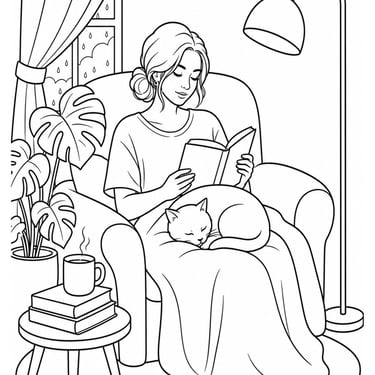
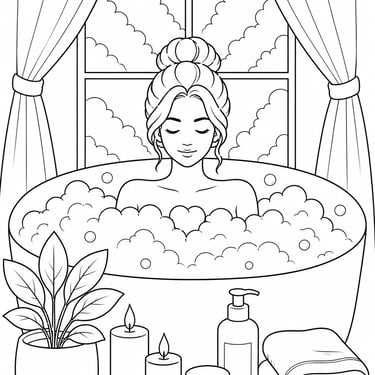
A Simple 15-Minute Screen-Free Evening Routine
You don't need a complicated evening ritual to sleep better or feel calmer.
In fact, many people find that the simplest routines are the easiest to maintain.
The goal isn't to create a perfect evening.
The goal is to create a gentle transition between a busy day and restful sleep.
Here's one example.
Minutes 1–5: Create a Clear Ending to Your Day
The hardest part of relaxing is often convincing your brain that the day is over.
Before doing anything else:
put your phone on silent
place it across the room instead of beside you
dim the lights
take one slow, deep breath
tell yourself, "Nothing else needs to be solved tonight."
This small pause helps create a psychological boundary between work, responsibilities, and personal time.
Minutes 6–10: Slow Your Mind Down
Choose one quiet activity that doesn't involve constant information.
For example:
make herbal tea
listen to calming instrumental music
stretch gently
water your plants
light a candle
open a window for fresh air
These small rituals signal to your nervous system that it's safe to slow down.
Minutes 11–15: Finish With Quiet Creativity
Instead of reaching for your phone again, spend the last few minutes doing something simple with your hands.
Many people enjoy:
coloring
journaling
sketching
knitting
puzzle books
Coloring is especially effective because it combines gentle movement with quiet visual focus.
Unlike social media, there are no notifications, no comparisons, and no endless stream of information.
Just one page.
One color at a time.
If You Have More Time: A 30-Minute Evening Routine
Some evenings allow a little more space.
If you have around thirty minutes before bed, you can build a slightly deeper routine without making it feel like another task on your to-do list.
One example could look like this:
First 10 Minutes
Finish small household tasks.
Wash the dishes.
Prepare tomorrow's clothes.
Write tomorrow's top three priorities.
Clearing these small responsibilities helps reduce mental clutter later.
Next 10 Minutes
Disconnect from screens completely.
Read a few pages of a novel.
Stretch gently.
Listen to calm music.
Sit quietly with a cup of tea.
Last 10 Minutes
Choose one relaxing creative activity.
Color a page.
Sketch simple shapes.
Write in a gratitude journal.
Complete a puzzle.
The goal is simply to allow your attention to settle in one place.
A Longer 60-Minute Evening Routine
Not every evening needs to be productive.
Sometimes the greatest luxury is allowing yourself an hour that asks nothing from you.
An hour without notifications.
Without news.
Without social media.
Without comparison.
For example:
10 minutes preparing tomorrow
10 minutes shower or bath
10 minutes tea and quiet music
20 minutes coloring
10 minutes reading before bed
Simple.
Gentle.
Repeatable.
Common Mistakes That Keep Evenings Stressful
Many people unintentionally make evenings more stimulating instead of more relaxing.
Some common habits include:
Trying to Be Productive Until Bedtime
If you answer emails until the moment you sleep, your brain never receives a clear signal that work has ended.
Switching From One Screen to Another
Watching television after scrolling social media may feel different, but your brain is still processing continuous digital input.
Expecting Instant Relaxation
Stress usually doesn't disappear within five minutes.
Give yourself permission to unwind gradually.
Choosing Activities That Feel Like More Work
Learning a difficult skill or starting a complicated project may be rewarding—but it isn't always relaxing after a mentally demanding day.
Why Coloring Works Better Than Many People Expect
Coloring is sometimes dismissed as something only children enjoy.
In reality, adult coloring has become popular because it solves several problems at once.
It gives your hands something meaningful to do.
It slows visual attention.
It encourages gentle focus instead of constant stimulation.
It provides a satisfying sense of completion.
Unlike scrolling, every page has a beginning and an end.
That feeling of finishing something—even something small—can help the brain feel settled before sleep.
Many people also appreciate that coloring has almost no barrier to entry.
You don't need talent.
You don't need expensive supplies.
You don't need lots of energy.
You simply begin.
Different people relax in different ways.
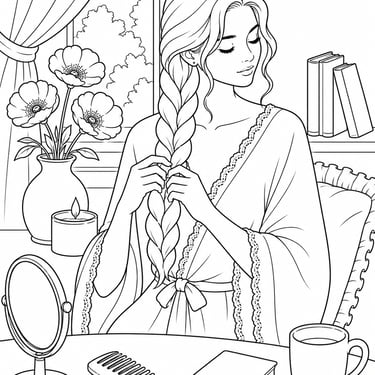
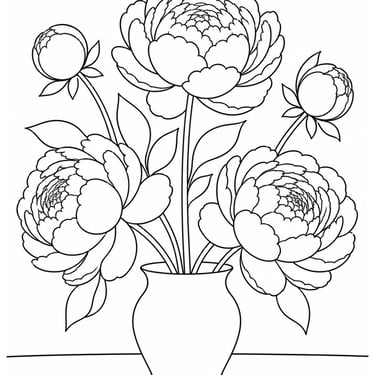
This free printable coloring 5 pages pack includes a variety of calming coloring styles designed to support relaxation, screen-free downtime, and gentle creative focus.
Whether you prefer simple bold designs, cozy scenes, or self-care themed pages, you'll find something that feels approachable and relaxing.
Calming Coloring Pages for Stress Relief
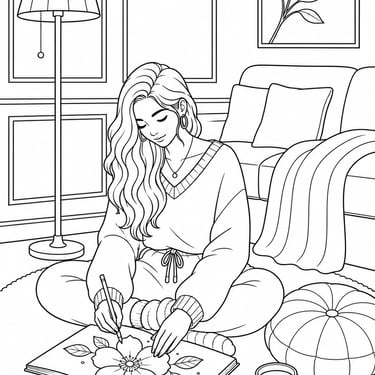
Different people find different types of coloring pages relaxing.
Some prefer simple bold designs.
Others enjoy cozy scenes, self-care themes, or gentle decorative patterns.
The goal is not artistic perfection.
The goal is creating a few quiet minutes for yourself.
Related Articles
You may also enjoy:
I Can't Stop Scrolling at Night — Why It Happens and What Actually Helps
Simple Relaxing Activities You Can Try Today
How to Build a Relaxing Evening Routine Without Screens
Low-Dopamine Hobbies That Help You Feel Calm Again
Coloring for Stress Relief: Why It Feels So Calming
Frequently Asked Questions (FAQ)
How can I stop scrolling before bed?
Replace part of your evening screen time with one calming offline activity rather than trying to quit screens completely overnight.
What should I do instead of using my phone at night?
Coloring, reading, journaling, stretching, tea rituals, puzzles, knitting, and calming music are all excellent screen-free alternatives.
How long should an evening routine be?
Even 15 minutes can make a noticeable difference if practiced consistently.
Does coloring really help adults relax?
Many adults find coloring calming because it combines quiet focus, repetitive movement, and creativity without pressure.
Is watching TV better than scrolling?
For some people it may feel less stimulating than social media, but it is still digital input. Completely screen-free activities usually provide a greater sense of mental rest.
What are the best hobbies before bed?
Coloring, reading, knitting, journaling, puzzle books, light crafts, and gentle stretching are among the most popular calming evening hobbies.
Why do I feel tired but can't stop scrolling?
Mental exhaustion often makes the brain crave easy stimulation, which is exactly what social media provides.
Can a bedtime routine improve sleep?
Many people find that consistent screen-free routines help them fall asleep more easily and feel calmer before bed.
Do I need to meditate?
Not necessarily. Many people relax more easily through gentle creative activities than formal meditation.
How do I start a relaxing evening routine?
Choose one simple activity you'll actually enjoy and repeat it consistently for a week.
Free printable stress relief coloring pages by Sacred Coloring
Conclusion
Feeling stressed all the time does not necessarily mean something is wrong with you.
For many people, stress is simply a sign that life currently contains more stimulation than recovery.
Small moments of calm may not solve every problem, but they can help create space to breathe, slow down, and reconnect with yourself.
You do not need a perfect routine.
You do not need hours of free time.
Sometimes a few quiet minutes with a cup of tea, a screen-free activity, or a simple coloring page can be enough to create a meaningful pause in a busy day.
The goal is not perfection.
The goal is recovery.
One small moment at a time.
The Goal Isn't Perfection
Many evening routine articles make people feel as though they need to spend two hours meditating, exercising, journaling, drinking herbal tea, reading philosophy, and sleeping by 9:30 PM.
Real life rarely works like that.
A good evening routine should feel simple enough that you'll actually repeat it.
Even fifteen peaceful minutes before bed can feel surprisingly restorative.
Consistency matters much more than complexity.
A simple routine you enjoy every evening is far more valuable than the perfect routine you only manage once a month.
What Makes an Evening Feel Truly Relaxing?
People often assume relaxation means doing nothing.
But many brains don't calm down simply by sitting still.
After a stimulating day, your mind often benefits from gentle, focused activity.
The most relaxing evening activities usually share several characteristics.
They are:
quiet
slow
repetitive
low-pressure
enjoyable without being exciting
free from constant notifications
Notice what isn't on that list.
Competition.
Deadlines.
Performance.
Perfection.
A calming evening isn't about achieving something.
It's about gradually reducing the amount of stimulation your brain receives.
Five Signs Your Evening Routine Isn't Helping You Recover
You might benefit from changing your evening routine if you regularly notice these signs:
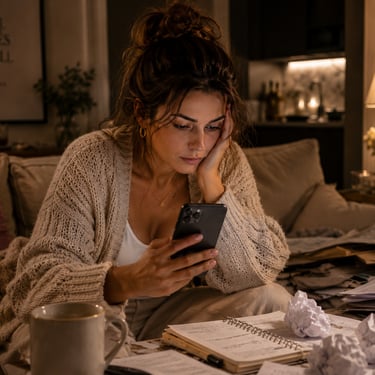
you keep checking your phone without thinking
bedtime gets later every night
you feel mentally busy even when you're exhausted
you wake up feeling like you never truly rested
your evenings disappear without leaving you feeling refreshed
None of these mean you're doing something wrong.
They simply suggest your brain isn't getting the type of rest it actually needs.
Replace "Stopping Screens" With "Starting Calm"
One of the biggest mindset shifts is to stop thinking about removing something.
Instead, think about adding something.
Instead of trying to spend less time on your phone...
Try spending more time doing something that naturally makes you forget your phone exists.
This is why creative hobbies work so well.
When your attention becomes gently absorbed in one calming activity, the urge to keep checking your screen often fades on its own.
Creating an Evening Routine That Fits Your Personality
There isn't one perfect evening routine.
Different people relax in different ways.
If You're Mentally Exhausted
Choose:
Bold & Easy coloring pages
herbal tea
soft instrumental music
If You Feel Anxious
Choose:
repetitive coloring patterns
slow breathing
gentle stretching
If You're Emotionally Drained
Choose:
feminine coloring pages
journaling
cozy reading
If You Feel Restless
Choose:
puzzles
coloring
knitting
simple crafts
Your evening routine should support how you feel—not how social media says you should feel.