
I Can’t Stop Scrolling at Night — Why It Happens and What Actually Helps
Many people struggle to stop scrolling at night, even when they feel exhausted. Learn why doomscrolling happens, why it often leaves you feeling worse, and what calming screen-free activities can help you relax before bed.
5/9/20266 min read
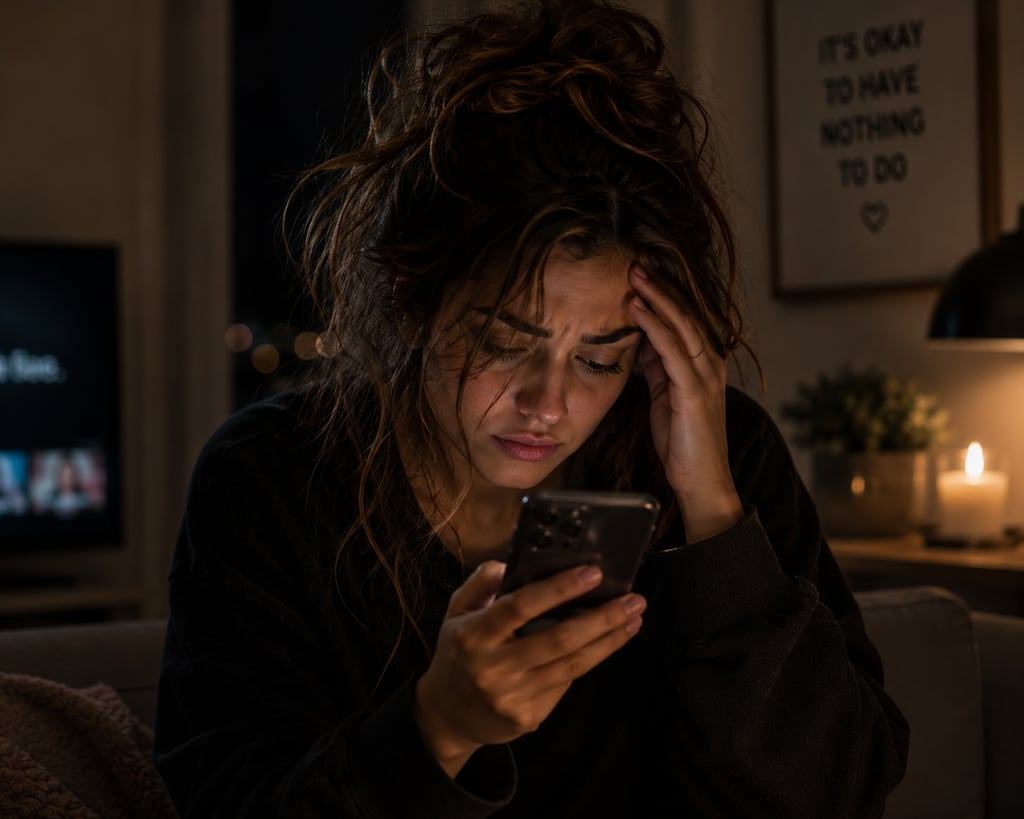
I Can’t Stop Scrolling at Night — Why It Happens and What Actually Helps.
Night scrolling often happens because the brain is mentally overstimulated but emotionally under-rested.
Many people use scrolling to decompress, avoid stress, delay anxious thoughts, or fill mental exhaustion after a long day. The problem is that endless scrolling can keep the brain activated instead of helping it truly rest.
Replacing scrolling with calmer offline activities — like coloring, journaling, stretching, reading, or simple creative routines — can help the nervous system slow down more naturally before sleep.
👉 [DOWNLOAD FREE RELAXATION COLORING PAGES]

Most people do not scroll at night because they are lazy.
They scroll because they are mentally tired.
After a long day, the brain naturally looks for stimulation that feels:
easy
emotionally light
effortless
distracting
instantly available
Scrolling provides exactly that.
Every swipe gives the brain:
something new
a tiny emotional reaction
a momentary distraction
a quick hit of stimulation
This creates what many people describe as a “doomscrolling loop.”
Not necessarily because every piece of content is negative — but because the brain keeps searching for one more thing that feels interesting, soothing, or emotionally engaging.
And tired brains are especially vulnerable to low-effort stimulation.
Sometimes scrolling is not even enjoyable anymore.
It simply becomes difficult to stop.
Sometimes nighttime scrolling is not actually about social media.
Sometimes it’s about:
avoiding silence
delaying tomorrow
escaping stress
calming emotional overload
trying to feel “off” after being mentally “on” all day
For many people, nighttime scrolling becomes a way to transition out of constant pressure.
The problem is that it often creates more stimulation instead of less.
Instead of helping the mind settle, it keeps the nervous system activated.
And that can leave people feeling strangely exhausted, restless, or emotionally numb afterward.
It usually starts innocently.
You pick up your phone “for a few minutes” before bed.
Maybe to relax. Maybe to disconnect after a long day.
You open Instagram, TikTok, YouTube, Reddit, or the news.
Then suddenly it’s much later than you expected.
Your eyes feel tired, but your brain still keeps searching for “one more thing.”
One more video.
One more post.
One more distraction.
You know you should sleep, but somehow your thumb keeps scrolling automatically.
If this happens often, you are far from alone.
For many people, nighttime scrolling has become an automatic habit — especially during periods of stress, emotional overload, loneliness, burnout, or mental exhaustion.
The difficult part is that scrolling rarely provides the kind of rest people are actually looking for.
Instead of calming the mind, it often keeps the brain stimulated long after the body feels tired.
That’s one reason more people are searching for:
screen-free evening routines
calming hobbies before bed
alternatives to doomscrolling
relaxing nighttime activities
ways to reduce phone use at night
Sacred Coloring creates printable coloring pages and calming screen-free creative activities designed to help people slow down, relax, and reconnect offline in a gentler, lower-pressure way.
Quick Answer
Why Is It So Hard to Stop Scrolling at Night?
Sometimes Scrolling Isn’t Really About the Phone
At first, scrolling can feel relaxing.
But after a while, many people notice the opposite effect:
mental overstimulation
emotional fatigue
restlessness
anxiety
difficulty sleeping
information overload
Part of the problem is that scrolling rarely gives the brain closure.
You consume information continuously without reaching a natural stopping point.
Unlike:
finishing a puzzle
completing a coloring page
reading a chapter
journaling before bed
there is no clear sense of:
👉 “I’m done now.”
Without that feeling of completion, the brain often stays mentally “open” and stimulated.
Social media can also increase:
emotional comparison
information fatigue
sensory overload
constant emotional switching
Especially late at night, when mental energy is already low.
According to sleep and mental health experts, excessive nighttime screen stimulation may also make it harder for the brain to transition naturally into rest mode before sleep.
What Actually Helps Instead of Scrolling?
The goal is not to create a perfect nighttime routine.
The goal is simply to give your brain a different type of stimulation.
Something:
slower
calmer
softer
less emotionally noisy
less mentally demanding
Many people find these low-pressure screen-free activities helpful before bed:
Low-Pressure Alternatives to Scrolling
coloring
journaling
herbal tea rituals
stretching
reading fiction
calming music
puzzle books
crochet or simple crafts
cozy creative hobbies
low-light evening activities
The important thing is not productivity.
It’s nervous system recovery.
Rest does not always need to be productive to be valuable.
Why Coloring Feels So Relaxing Before Bed
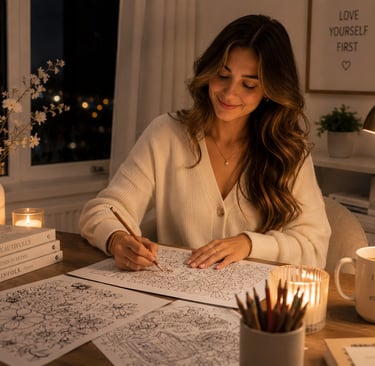
Coloring may seem simple, but that is part of why it works so well as a screen-free evening activity.
Unlike scrolling, coloring gives the brain:
one focal point
slower visual input
repetitive movement
gentle decision-making
a calmer rhythm
Many people describe coloring as relaxing because it creates:
quiet focus
low-pressure creativity
emotional softness
a sense of visual calm
There are no notifications.
No endless emotional input.
No pressure to respond, compare, or react.
Instead, your attention stays in one place for a while.
Coloring also creates a gentle connection between:
👉 hands + eyes + brain
That slower type of engagement can feel grounding after hours of digital stimulation.
And unlike many hobbies, coloring is easy to begin even when you feel mentally tired.
You do not need:
energy
planning
artistic skill
motivation
“productivity”
Just a quiet page and a few calmer minutes.
Why Scrolling Often Makes You Feel Worse
A Simple 15-Minute Screen-Free Night Routine
You do not need a complicated wellness routine to feel calmer at night.
Even very small changes can help create more mental space before sleep.
Example Routine
First 5 Minutes
Put your phone face-down or across the room.
Dim the lights slightly.
Allow your eyes and brain to slow down gradually.
Next 5 Minutes
Make tea.
Play calming music.
Stretch gently.
Sit without constant input for a moment.
Let your nervous system transition out of “high stimulation mode.”
Last 5 Minutes
Color a simple page slowly.
Not perfectly.
Not productively.
Not for social media.
Just quietly.
👉 Download 5 printable coloring pages designed for calm evening creativity:
Cozy Screen-Free Evening Inspiration
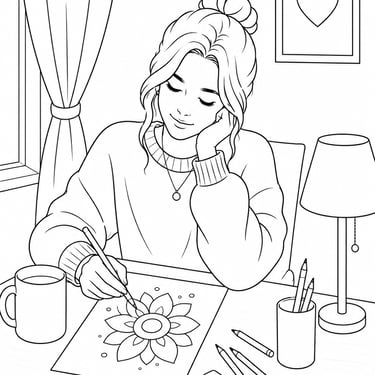
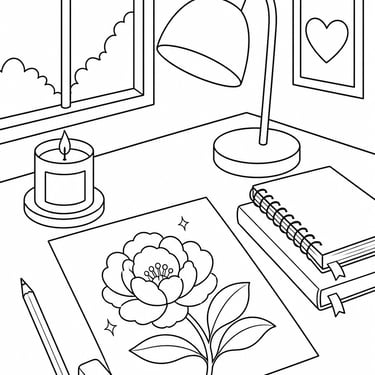
Best Types of Coloring Pages for Night Relaxation
Different emotional states often need different types of creative stimulation.
If you feel overwhelmed…
Try: bold & easy coloring pages
Why it helps: large coloring spaces create less visual pressure and feel easier for tired or overstimulated minds.
If you feel anxious…
Try: repetitive patterns or calming designs
Why it helps: repetitive movement and visual rhythm can feel grounding and emotionally calming before sleep.
If you feel mentally tired…
Try: cozy simple coloring pages
Why it helps: gentle low-detail pages help the brain focus softly without requiring too much energy or concentration.
If you feel emotionally drained…
Try: feminine or self-care coloring pages
Why it helps: soft creative themes can feel emotionally comforting, calming, and restorative.
If you feel overstimulated…
Try: minimal low-detail coloring pages
Why it helps: simpler visuals create calmer visual input and reduce mental overload before bed.
If you feel restless…
Try: repetitive coloring designs
Why it helps: repetitive patterns and slow coloring movements can help create a more grounded, steady feeling.
This is why many people prefer:
simple coloring pages at night
low-detail printable pages
cozy calming designs
screen-free creative activities before sleep
Complex pages can sometimes feel overstimulating before bed.
Simpler pages are often easier for tired minds.
Related Screen-Free Guides
You may also enjoy:
Coloring for Stress Relief
Simple Relaxing Activities You Can Try Today
How to Build a Relaxing Evening Routine Without Screens
Low-Dopamine Hobbies That Help You Feel Calm Again
Easy Ways to Relax Without Overthinking
Free Printable Relaxation Coloring Pages
Sacred Coloring offers printable coloring pages designed for:
calming evening routines
anti-scrolling habits
mindful screen-free relaxation
gentle creative focus
low-pressure nighttime creativity
The pages are designed to feel:
calming
visually soft
easy to begin
emotionally gentle
relaxing without pressure
👉 Download 5 printable coloring pages designed for calm evening creativity:
FAQ
Why do I scroll even when I’m tired?
Many people scroll because their brain is looking for low-effort stimulation after emotional or mental exhaustion. Scrolling feels immediate, distracting, and easy — even when it no longer feels enjoyable.
Is doomscrolling bad before sleep?
For many people, doomscrolling can increase overstimulation and make it harder to mentally slow down before sleep. It may also contribute to emotional fatigue and difficulty relaxing at night.
Why does scrolling make me feel worse afterward?
Scrolling often creates continuous stimulation without emotional closure. Instead of feeling rested, the brain can feel overloaded, restless, or mentally scattered afterward.
What should I do instead of scrolling at night?
Low-pressure offline activities often feel more calming before bed. Examples include coloring, journaling, tea rituals, reading fiction, stretching, calming music, or cozy creative hobbies.
Can coloring help me relax before bed?
Many people find coloring calming because it combines repetitive movement, quiet focus, and screen-free creativity without pressure or overstimulation.
What are calming hobbies before sleep?
Some calming nighttime hobbies include:
coloring
reading
journaling
knitting
puzzle books
calming crafts
gentle stretching
tea rituals
How do I reduce screen time at night?
Start small. Instead of trying to stop scrolling completely, replace 10–20 minutes of phone time with one calming offline activity before bed.
Why do I feel mentally tired after scrolling?
Scrolling often creates constant stimulation without completion or rest. This can leave the brain feeling overloaded instead of restored.
Are screen-free routines actually helpful?
For many people, screen-free evening routines help create a calmer transition between daytime stimulation and nighttime rest.
What are simple relaxing activities for adults?
Simple relaxing activities include coloring, cozy crafts, reading fiction, journaling, tea rituals, calming music, and other low-pressure creative hobbies.
Final thought
Rest does not always need to look productive to matter.
Sometimes the brain simply needs:
less noise
slower input
gentler focus
fewer emotional demands
Small offline moments can help create that feeling.
Not instantly.
Not perfectly.
But gradually.
And sometimes, something as simple as quietly coloring a page before bed can feel far more restorative than another hour of scrolling.